Case study
An electrical contractor puts each job's permit, inspections and hours on one page
Brightlathe Electric is an electrical contractor with about twenty electricians. Its permits sat in a filing cabinet, its inspection dates in the foremen's memory and its hours on paper timesheets. Then a drywall crew arrived at a job before anyone had called for the rough-in inspection, and the owner decided that each job needed one page that held all of it.
- Company
- Brightlathe Electric Electrical service work and commercial projects
- Industry
- Electrical contractors
- Location
- Northern Colorado
- Size
- 26 employees, about 20 of them electricians
Before and after
What the software changes
-
Before Nobody requests the rough-in inspection until another trade shows up
After When the foreman marks rough-in ready, the office is reminded to call for the inspection, and the result goes on the job page
-
Before Circuits added on a walk-through never reach a bill
After A change order signed on site shows on the job page and on the next progress bill
-
Before Whether a job made money is known only after it closes
After The project manager checks hours against the estimate for every phase while the job runs
-
Before A won bid is typed in again to set up the job
After The bid's labor and material become the job's budget
The story
The business
Brightlathe Electric is an electrical contractor in northern Colorado. Elena started it as a service shop with one van. Today it has about twenty electricians, split between service calls and commercial projects, mostly tenant build-outs.
Tobias, the project manager, ran the commercial jobs from a spreadsheet. Bids were priced in an estimating program, and when one was won he typed its labor and material in a second time to set up the job. Permits sat in a filing cabinet. Each foreman kept track of their own inspections. Hours came in on paper timesheets every Friday.
The problem
On a Thursday in October, a drywall crew pulled up to a restaurant build-out with a truckload of board. Cal, the foreman, met them at the door. His crew had finished rough-in on Monday, and the walls stood open for an inspector nobody had called. Cal thought the office had. The office was waiting to hear from Cal.
Tobias called the building department. The first opening was the following Tuesday. The drywall crew hung the few walls with no wire in them and left before lunch, and the general contractor's superintendent asked who was going to pay for their day.
Looking for the permit number that afternoon, Tobias found a page from Cal's notebook in the job's folder. In September the superintendent had walked the kitchen and asked for four more circuits. Cal's crew had run them. The work had never reached a bill.
That evening Elena tried to see where the job stood. The timesheets gave hours and a job name, and nothing about rough-in or trim. She would learn whether it had made money after it closed, as always.
She did not want a new estimating program, and the accounting software was staying. She wanted each job's permit, inspections, hours and changes kept together, where nobody had to remember to tell anyone.
What was built
PlankByte built a job page: one page for each job, with its budget, its permit, its inspections, its hours and its change orders.
When a bid is won, its labor and material become the job's budget. Nobody types them again. The office adds the permit number and the inspections the job needs, named the way the local inspectors name them.
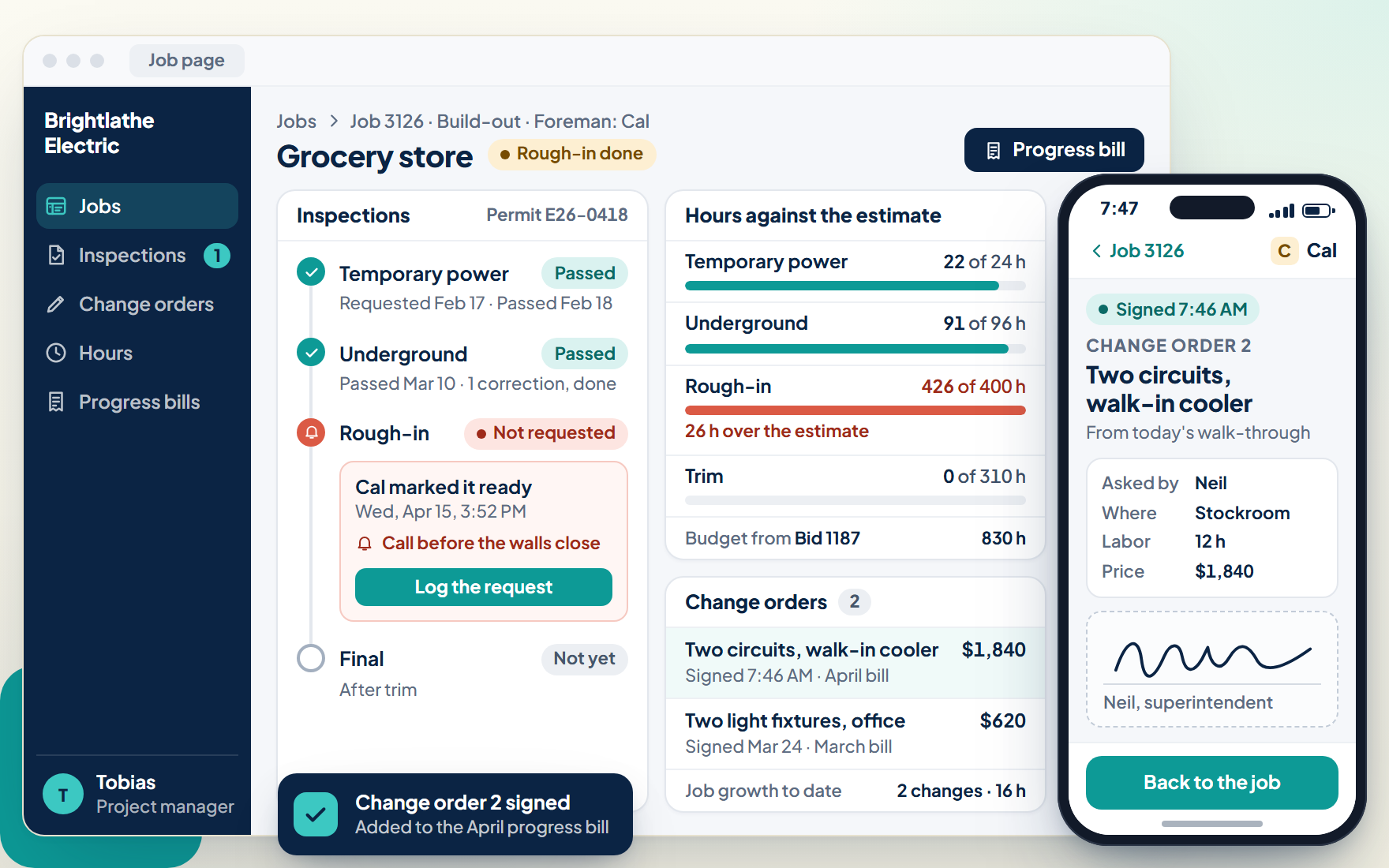
Cal logs his crew's hours by phase from his phone each day. When rough-in is done, he marks the stage ready. The office gets a reminder to call for the inspection, and the page flags that stage until someone has. The request date goes on the page, then the result. Any corrections become tasks for Cal's crew.
When a superintendent asks for something extra on a walk-through, Cal writes up the change order on his phone, with its price, and gets it signed on the spot. The signed change shows on the job page and on the next progress bill, with a running total of how much the job has grown.
Tobias opens a job and checks its hours against the estimate, phase by phase, while the job is still running.
The first weeks
The shop started with the next bid it won. The seven jobs already under way took more work: Tobias moved each budget over from his spreadsheet, and the office went through the filing cabinet for their permits and the inspections already passed.
The inspection lists took a few tries. The shop works in two counties, and no two building departments call their inspections by the same names. The office ended up with a list for each.
The hours were the hard part. At first Cal entered the whole week on Friday, from memory, and most of it landed under rough-in. It was about a month before logging each day became a habit.
A day now
The next spring, Cal finished rough-in on a grocery build-out on a Wednesday afternoon. He marked the stage ready before he left the site.
The reminder was waiting when the office opened on Thursday, and the inspection was called in that morning. The inspector came on Monday, passed the rough-in and wrote up one correction: a run of cable in the back hallway that needed another strap. It reached Cal's phone as a task and was done that afternoon.
On the same job the superintendent asked for two more circuits for a walk-in cooler. Cal wrote up the change order, and the superintendent signed it in the stockroom. It went on that month's progress bill.
Tobias had opened the page that Thursday as well. Rough-in had run a little over what the bid assumed, and he knew it with all of the trim still ahead.
The drywall crew arrived the Wednesday after. The walls were ready for them.
PlankByte
Case study
Custom software for small businesses.
plankbyte.com/case-studies/electrical-contractors-job-page/
Contact: plankbyte.com/contact/